Thinking about getting extensions but worried about damage? You’re not alone. Many women ask whether hair extensions Boston MA salons offer are safe for natural hair. The truth is simple: extensions themselves are not the problem. Poor installation, wrong methods, and bad aftercare cause most damage.
If you are researching before booking, this guide will explain what actually causes damage, which methods are safest, and how Boston clients can protect their natural hair while enjoying longer, fuller results.
Are Hair Extensions Boston MA Salons Offer Actually Damaging?
The short answer is no – not when installed and maintained correctly.
Professional hair extensions Boston MA stylists customize the method based on your hair type, density, and lifestyle. Damage usually happens when:
- The wrong method is used
- Extensions are too heavy for fine hair
- Installation is too tight
- Maintenance appointments are skipped
- DIY or untrained application is done
When done properly, extensions should not thin or permanently harm your natural hair.
What Actually Causes Hair Extension Damage?
Hair damage is usually caused by tension. This is known as traction stress.
If extensions pull too tightly on the roots, the follicles become stressed. Over time, this can lead to breakage or thinning.
Other causes include:
- Extensions that are too heavy
- Poor sectioning during installation
- Leaving extensions in too long
- Not brushing properly
- Sleeping with wet hair
The key is choosing safe hair extensions methods and working with a trained stylist.
Are Sew In Hair Extensions Damaging?
Many clients ask, are sew in hair extensions damaging?
Sew-in extensions can be safe when done correctly. However, they are not ideal for everyone.
Sew-ins involve attaching wefts to a base, often secured with beads or braided sections. If the base is installed too tightly, it can create tension on the scalp.
Sew-ins are generally best for:
- Thick hair
- Coarse hair
- High-density hair
They may not be ideal for very fine or fragile hair.
If you are searching for sew in hair extensions near me, make sure your stylist checks your hair density first. A professional consultation prevents long-term stress.
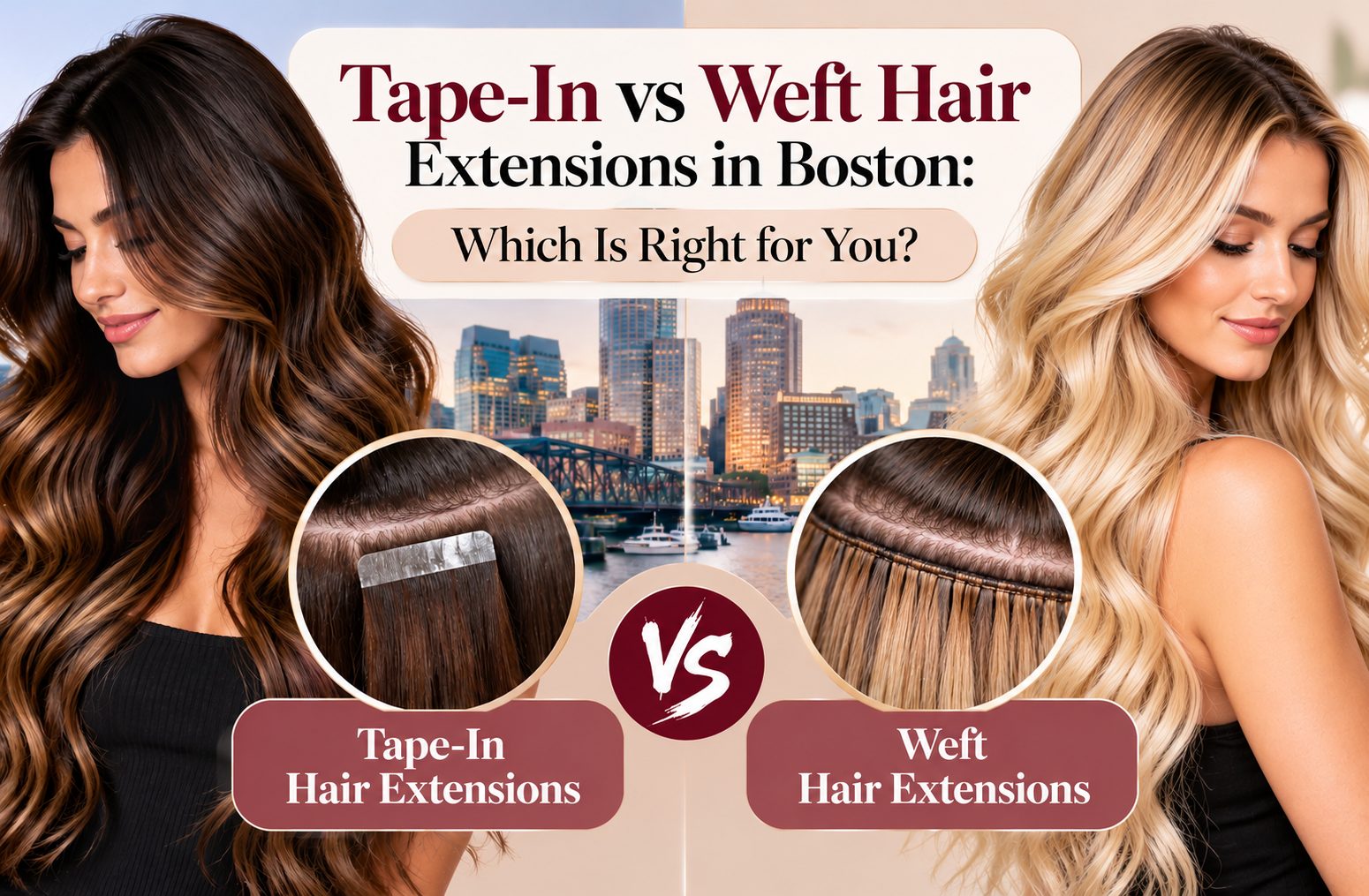
Tape In Hair Extensions Boston: Are They Safer?
Tape in hair extensions Boston salons offer are often considered one of the gentler methods when applied correctly.
Tape-ins lay flat against the scalp. They distribute weight evenly and work well for fine to medium hair types.
They are lightweight and flexible, which reduces pulling.
However, problems can happen if:
- The sections are too large
- Oil-based products break down the adhesive
- Clients skip maintenance
When maintained every six to eight weeks, tape-ins are generally safe for most hair types.
Beaded Weft Extensions Boston: What About Them?
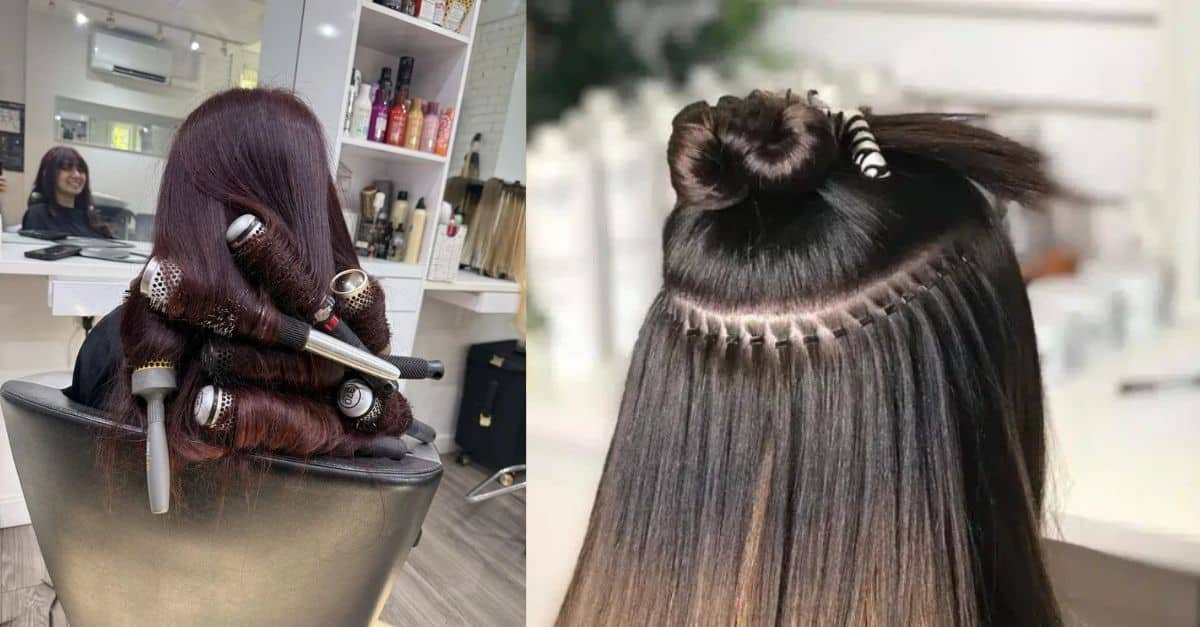
Beaded weft extensions Boston stylists install use small silicone-lined beads to secure wefts without glue or braids.
This method avoids adhesive, which some clients prefer.
Beaded wefts:
- Allow flexibility
- Are reusable
- Provide strong volume
However, they must be installed with correct spacing and tension. When too heavy or placed improperly, they can stress finer hair.
This method is usually ideal for medium to thick hair.
The Safest Hair Extension Methods for Boston Clients
The safest method depends on your natural hair.
Fine hair often benefits from lightweight tape-ins.
Medium hair can handle tape-ins or beaded wefts.
Thick hair can support sew-ins or wefts.
There is no single “safest” method for everyone. The safest option is the one that matches your hair density and lifestyle.
Professional safe hair extensions methods focus on:
- Proper weight distribution
- Even tension
- Healthy sectioning
- Regular maintenance
Customization is what protects your hair.
Maintenance: The Real Secret to Preventing Damage
Many clients think installation is the only factor. Maintenance matters just as much.
Skipping move-up appointments can cause matting and tension at the root. This increases breakage risk.
Most methods require maintenance every six to eight weeks.
Brushing gently with an extension-safe brush is also essential. Always brush from the ends upward.
Sleeping with loose braids or a silk pillowcase reduces friction.
Damage prevention is mostly about care.
Signs Your Extensions Are Too Tight
You should never feel constant pain.
Warning signs include:
- Headaches after installation
- Redness along the scalp
- Burning sensation
- Tight pulling at the hairline
If you experience these symptoms, contact your stylist immediately.
Healthy extensions should feel secure but comfortable.
Boston Climate and Hair Extension Health
Boston weather can affect both your natural hair and your extensions.
Humidity can cause swelling and tangling. Dry winter air can increase brittleness.
Using hydrating but lightweight products keeps both natural hair and extension hair healthy.
Avoid heavy oils at the root, especially with tape-in methods.
Seasonal adjustments help prevent unnecessary stress on your hair.
Who Should Avoid Hair Extensions?
Extensions may not be ideal if you:
- Have active scalp conditions
- Have severe thinning
- Recently experienced significant hair loss
- Cannot commit to maintenance appointments
A consultation will determine whether you are a good candidate.
Can Hair Extensions Cause Permanent Hair Loss?
Permanent hair loss is rare and usually linked to long-term tension, known as traction alopecia.
This happens when tight hairstyles or extensions are worn continuously without breaks.
When installed properly and removed safely, professional hair extensions Boston MA salons provide should not cause permanent damage.
Taking occasional breaks between installations can also protect your scalp.
How to Choose the Right Salon in Boston
If you are researching before booking, look for:
- Licensed stylists
- Extension specialists
- Strong local reviews
- Consultation before installation
- Clear maintenance schedule
Avoid salons that promise one-size-fits-all methods.
Personalization prevents damage.
Quick Summary
Hair extensions are not automatically damaging. Most problems come from poor installation, wrong method choice, or skipped maintenance. Tape-ins, beaded wefts, and sew-ins can all be safe when matched properly to your hair type. Choosing an experienced Boston stylist and following aftercare guidelines protects your natural hair long term.
FAQs
Are hair extensions Boston MA salons offer safe?
Yes, when installed by trained professionals and maintained properly. Damage usually occurs from improper tension or skipped maintenance, not from the extensions themselves.
Are sew in hair extensions damaging?
Sew-ins can cause tension if installed too tightly or used on fine hair. When matched to thick hair and installed correctly, they can be safe and long-lasting.
Are tape in hair extensions Boston clients get better for thin hair?
Tape-ins are often a good choice for fine or thin hair because they are lightweight and lay flat. Proper sectioning and maintenance are important for safety.
What are the safest hair extension methods?
The safest method depends on your hair type. Lightweight tape-ins suit fine hair, while thicker hair can handle wefts or sew-ins. Custom installation is key.
Can extensions cause hair loss?
Long-term tight tension may lead to traction alopecia. Proper installation and regular maintenance prevent this in most cases.
How often should I maintain extensions?
Most methods require maintenance every six to eight weeks. Skipping appointments increases the risk of tangling and stress at the roots.
Thinking About Hair Extensions?
If you are considering hair extensions Boston MA, a professional consultation ensures the right method for your hair type. With proper installation and care, extensions can enhance your look without harming your natural hair.