Dreaming of longer, fuller hair is a common desire, but the path to achieving it can feel overwhelming with so many options on the market. If you are searching for weft hair extensions in Boston, you are likely weighing the pros and cons of the two most popular methods: wefts and tape-ins. Both can transform your look, but they offer very different experiences in terms of application, maintenance, and lifestyle compatibility. This guide will break down everything you need to know to make the right choice for your hair goals.
What Are Weft and Tape-In Hair Extensions?
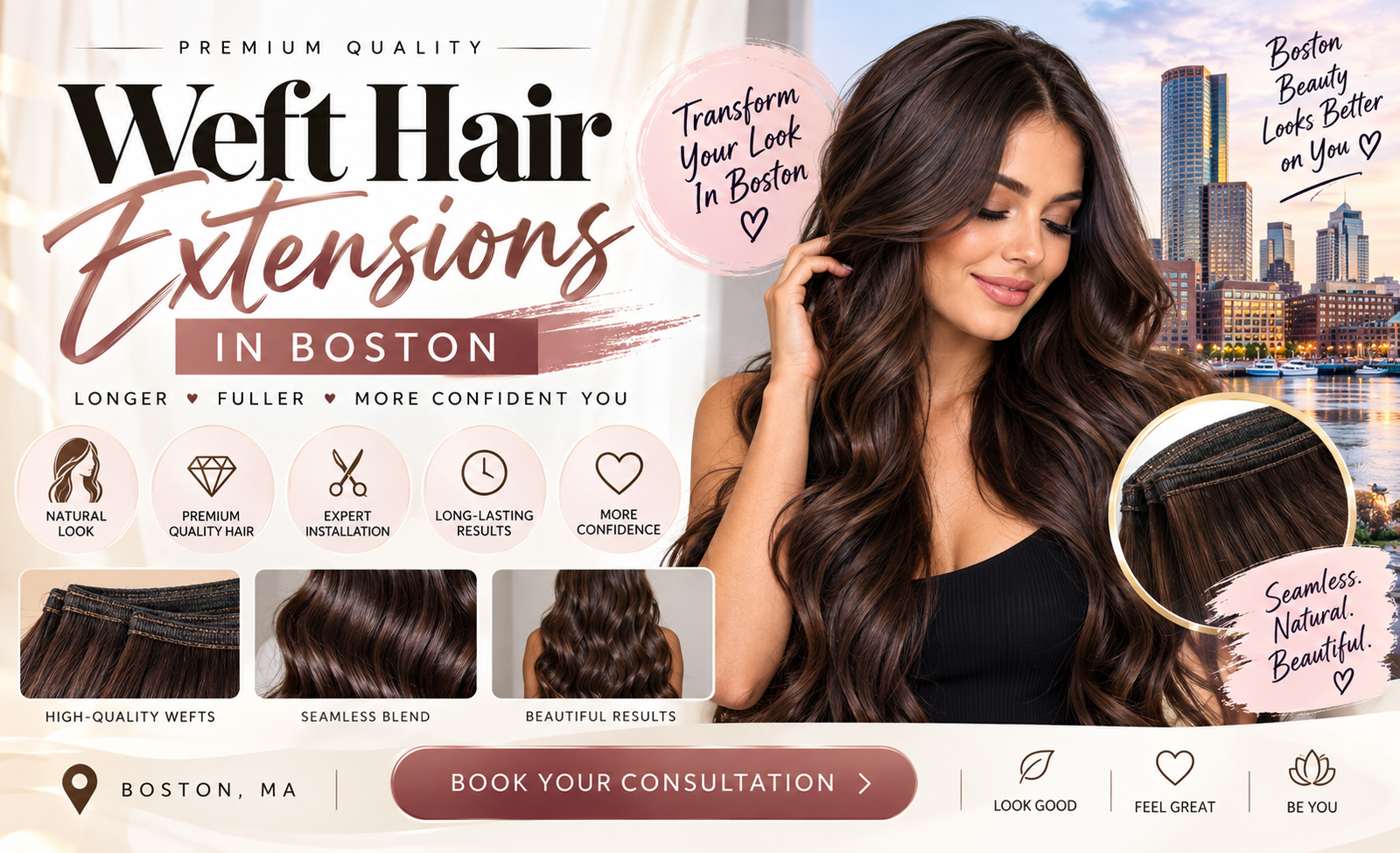
Before diving into the comparison, it is important to understand what each method entails. Weft hair extensions involve a curtain of hair (the “weft”) that is attached to your natural hair using methods like sewing, braiding, or clipping. This creates a seamless layer of volume and length.
Tape-in extensions, on the other hand, are small, individual panels of hair that are sandwiched around your natural hair using a strong, medical-grade adhesive tape. They are known for being lightweight and lying flat against the head.
Why Is Choosing the Right Method Important?
The method you choose impacts everything from how long the extensions last to how you care for them and even the health of your natural hair. The wrong choice can lead to discomfort, slippage, or damage. Understanding the distinct advantages of each method ensures you invest in a solution that fits your lifestyle and hair type.
Benefits of Weft Hair Extensions
Wefts are a favorite for those seeking maximum volume and length. Because they are applied in larger sections, they can add significant thickness quickly. They are also incredibly durable; depending on the method (like hand-tied or machine-sewn), they can last for several months with proper care. They are ideal for thick hair types that need substantial coverage.
Benefits of Tape-In Hair Extensions
Tape-ins are celebrated for their discreetness. The tape lies completely flat against the scalp, making them virtually invisible. They are lightweight and comfortable, making them a great option for fine or thin hair. Application is generally faster than weft methods, and they are reusable, often lasting 6 to 8 weeks before needing to be moved up.
Signs You Need Hair Extensions
You might be a good candidate for extensions if you:
-
Struggle with hair that is slow to grow.
-
Want to add volume to fine hair.
-
Have a special event (like a wedding) and want a temporary transformation.
-
Experienced hair thinning due to stress or medical reasons.
-
Simply want to experiment with a new color or style without a commitment.
How Does the Application Process Work?
-
Weft Method: Your stylist will section your hair and create a foundation, often a braid or a row, to sew the weft onto. This process can take several hours.
-
Tape-In Method: Your stylist will take small sections of hair and sandwich the tape panels between your natural strands, pressing firmly to secure them. This process is much faster, often taking under two hours.
Best Practices / Tips for Longevity
To get the most out of your investment:
-
Wash Carefully: Use sulfate-free shampoo and avoid scrubbing the attachment points.
-
Brush Gently: Always use a loop brush or a soft-bristle brush to avoid pulling.
-
Sleep Smart: Braid your hair or tie it in a loose ponytail before bed to prevent tangling.
-
Avoid Heat: Keep heat styling tools away from the bonds or tape.
Common Mistakes to Avoid
Many people make the mistake of trying to remove extensions at home. This can cause severe damage to your natural hair. Another common error is not returning to the salon for maintenance. Tape-ins need to be moved up every 6-8 weeks, and wefts may need tightening. Skipping these appointments leads to matting and breakage.
How to Choose the Right Service
When looking for weft hair extensions in Boston, the most important factor is the stylist, not just the method. Look for a salon that specializes in extensions and offers a consultation. A professional will assess your hair type, lifestyle, and budget to recommend whether a weft or tape-in is truly best for you. They should also be transparent about the cost of the hair and the maintenance schedule.

Frequently Asked Questions (FAQs)
Q: Can I swim with hair extensions?
A: Yes, but you should wear a swim cap and rinse your hair immediately after to prevent chlorine or salt damage.
Q: Which method is more expensive?
A: Generally, weft extensions have a higher initial cost due to the time and skill required for application, but they may last longer.
Q: Do tape-ins damage your hair?
A: When applied and removed correctly by a professional, they should not cause damage.
Conclusion
Choosing between weft and tape-in extensions comes down to your specific hair needs and lifestyle. If you crave maximum volume and durability, a weft might be your best bet. If you prefer a lightweight, discreet feel, tape-ins could be the winner. Regardless of your choice, the key to a flawless look lies in the hands of an experienced professional. Do your research, book a consultation, and get ready to fall in love with your new hair.