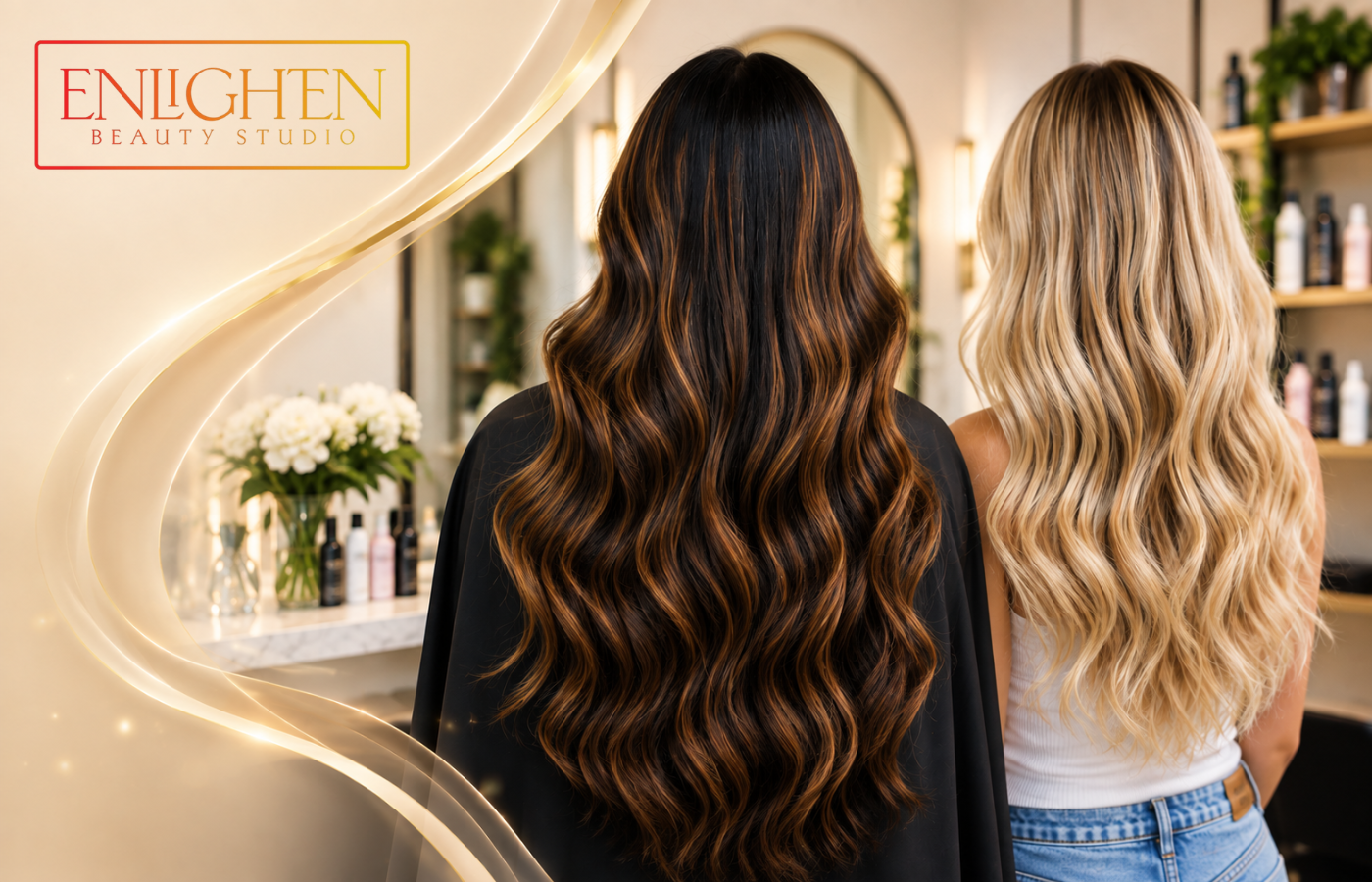
Finding the best balayage in Boston starts with one big question: what shade actually works for you? Balayage has become the go-to coloring technique for anyone who wants that effortless, sun-kissed look, but here’s the thing, the magic isn’t just in the technique, it’s in the color. You can have the most skilled hand-painting in the world, but if the shade washes you out or fights with your skin tone, it won’t feel right. This guide walks you through exactly how to pick a balayage color that flatters your features, fits your lifestyle, and keeps you loving your reflection for months.
What Is Balayage?
Balayage is a French word meaning “to sweep,” and that’s precisely what your stylist does, they sweep color onto your hair in a freehand, hand-painted motion, with no foils involved . Unlike traditional highlights that create uniform stripes from root to tip, balayage mimics the natural way sunlight hits your hair, producing a soft, graduated effect where the ends are lighter and the roots remain naturally darker .
Think of it as watercolor for your hair. There are no harsh lines or obvious regrowth patches, just a seamless blend that grows out beautifully. This technique is incredibly versatile, working on straight, wavy, curly, short, or long hair. Because the color is painted on the surface of carefully selected sections, it gives a dimensional, lived-in look that feels modern and effortless, not “done” .
Why Choosing the Right Balayage Color Matters
Picking a balayage shade is not just about looking at a picture on Instagram and saying, “I want that.” It’s a deeply personal choice, especially when comparing balayage vs highlights Boston options. The right shade can brighten your complexion, make your eyes sparkle, and even take years off your appearance. It’s like makeup for your hair. The wrong tone, however, can leave you looking washed out, tired, or sallow, no matter how well the color is painted.
Boston’s dynamic weather, from humid summers to dry, cold winters, can also affect how your color looks and fades . A shade that works beautifully in July might feel flat by November. That’s why a proper consultation, where the stylist evaluates your skin tone, eye color, natural base, and even your wardrobe, is essential. It’s not about trends, it’s about what makes you glow .
Benefits of Balayage
-
Low Maintenance: Because balayage leaves the roots darker and blends lighter tones through the lengths, there’s no visible “line of demarcation” as your hair grows. You can easily go 10 to 14 weeks or even longer between appointments .
-
Natural Look: The hand-painted technique creates soft, subtle transitions between shades, mimicking the natural lightening effect of the sun. It looks effortless and never “stripy” .
-
Versatility: Balayage works on every hair color and texture. It can be used to add subtle brightness to dark hair or to create a dramatic, high-impact blonde transformation. It’s also fully customizable to your face shape and personal style .
-
Healthier Hair: Since the color is painted on the surface and not wrapped in foil (which traps heat and accelerates processing), balayage is generally less damaging than traditional highlighting techniques. It also allows for more selective lightening, preserving the integrity of your hair .
Signs You Need Balayage
-
Your Highlights Have Harsh Stripes: If your current highlights have obvious, blunt lines and a stark contrast between your roots and ends, balayage is the fix. It softens those lines for a more modern, blended look .
-
You’re Tired of Constant Salon Visits: If you’re spending your life in the salon chair getting root touch-ups every six weeks, balayage offers a beautiful break with its seamless grow-out.
-
Your Hair Feels One-Dimensional: If your natural color looks flat, dull, or lacks depth, balayage adds dimension, movement, and that “expensive hair” shine .
-
You Want to Go Lighter but Are Scared of Commitment: Balayage is the perfect middle ground. It lets you brighten your look significantly without the commitment or damage of a full, all-over bleach job .
How Does Balayage Work?
The process is more artistic than scientific. Your stylist will first have a detailed consultation to discuss your goals. Then, using a freehand technique, they “paint” the lightener onto specific sections of your hair . The placement is strategic, focusing on areas where the sun would naturally hit, like the front pieces and the top layers.
The lightener is left to process in the open air, which allows for a gentler, slower lift compared to foils. This creates that signature soft, graduated effect . Once the desired lightness is achieved, the lightener is rinsed, and the hair is toned. Toning is the final, crucial step, it neutralizes any unwanted warmth (like brassiness) and perfects the final shade, whether you want an icy blonde, a warm caramel, or a cool beige .
Best Practices / Tips for Your Balayage
-
Use a Purple Shampoo: To keep your blonde or cool-toned balayage from turning brassy, incorporate a purple shampoo into your routine once or twice a week .
-
Invest in a Deep Conditioner: Lightened hair needs moisture. Use a deep conditioning mask weekly to keep your hair soft, shiny, and healthy, especially during Boston’s harsh winters .
-
Book a Gloss Appointment: Between full balayage sessions, a professional gloss or toner can refresh your shade, boost shine, and neutralize any discoloration. Think of it as a quick, inexpensive tune-up .
-
Protect from Heat and Sun: Always use a heat protectant before styling and consider a UV protectant spray for sunny days, color fades faster in the sun .
Common Mistakes to Avoid
-
Choosing a Color Based Only on Trends: What looks amazing on a celebrity might not be right for you. Don’t pick a shade that doesn’t complement your skin tone, no matter how popular it is .
-
Going Too Light Too Fast: A dramatic blonde transformation rarely happens in one session, especially on dark hair. Trust the process. Rushing can lead to damage and unwanted orange tones .
-
Skipping the Consultation: The consultation is not just a chat, it’s the blueprint for your color. Don’t skip it or breeze through it. Be honest about your hair history (like previous color or relaxers) and your lifestyle .
-
Underestimating Maintenance: Some balayage shades, like ash blonde, can be high-maintenance. If you don’t have the time or budget for frequent glosses, opt for a lower-maintenance beige or warm shade .
How to Choose the Right Balayage Color
This is the heart of the matter. The best way to choose is to consider three key factors: your skin tone, your natural base, and your maintenance preference.
1. Match It to Your Skin Tone
Your skin’s undertone is the non-negotiable guide.
-
Cool Undertones: If you have pink or blue undertones and silver jewelry looks best on you, lean into cooler colors. Ash blonde, icy beige, pearl, mocha, or smoky browns will make your features pop .
-
Warm Undertones: If you have golden or olive undertones and gold jewelry flatters you, embrace warmth. Think honey blonde, golden caramel, rich chocolate, chestnut, or copper .
-
Neutral Undertones: The lucky ones! You can pull off both cool and warm shades, giving you the most flexibility .
2. Consider Your Hair’s Natural State
-
Brunettes: You have the most options. Caramel, honey, toffee, and golden beige are classic, flattering choices that add warmth and dimension .
-
Blondes: Focus on depth and softness to avoid flatness. Beige, champagne, and pearl blondes are gorgeous, sophisticated choices .
-
Dark/Black Hair: Go for richness, not a massive leap. Espresso, chestnut, or subtle caramel ribbons add beautiful dimension without a harsh, high-maintenance contrast .
3. Be Honest About Maintenance
-
Low-Maintenance: Choose colors close to your natural base, like soft beige, honey, or chocolate. These grow out seamlessly and require less frequent toning .
-
High-Maintenance: Colors like platinum, silver, ash blonde, and pastels are stunning but demand regular glosses (every 6-8 weeks) to stay vibrant and prevent brassiness .
Finding the best balayage in Boston means finding a salon that walks you through these choices with patience and expertise. The process is a collaboration. When you trust your stylist and communicate your needs, you’ll walk out with color that feels like it was made just for you.
Frequently Asked Questions (FAQs)
1. What is the difference between balayage and highlights?
Traditional highlights use foils to create uniform stripes of color from root to tip. Balayage is hand-painted without foils, creating a softer, more natural, sun-kissed effect with a seamless grow-out .
2. How long does a balayage appointment take?
It typically takes 2.5 to 3.5 hours, depending on your hair’s length, density, and how light you want to go .
3. How often do I need to get a balayage touch-up?
One of the biggest perks is the low maintenance. You can generally go 10 to 14 weeks between appointments, and some people even stretch it to 4-5 months because the grow-out is so natural .
4. Is balayage damaging to my hair?
Because balayage is painted on the surface and doesn’t use the heat of foils, it’s generally a more gentle lightening technique than traditional highlights, making it a healthier option .
5. What does “toning” mean?
Toning is the final step after lightening. A toner is a demi-permanent color that corrects unwanted warmth (like yellow or orange) and adds the perfect shade, whether it’s beige, ash, or golden. It gives your hair that finished, polished look .
Conclusion
Your perfect balayage color is out there, and it’s more than just a shade—it’s a feeling. It’s the confidence of knowing your hair looks incredible whether you’re in a professional meeting, out with friends, or just running errands on a rainy Boston day. A professional hair salon Boston can help you choose a color that complements your skin tone, works with your natural base, and fits your maintenance preferences. By understanding your needs and being clear about your maintenance limits, you’re not just choosing a hair color, you’re choosing a version of yourself that feels effortlessly radiant. So, take the plunge, find a stylist who listens, and get ready to fall in love with your hair all over again.