If you have fine or thin hair, you’ve probably wondered whether extensions would make it look fuller or just weigh it down. It’s a fair worry. Fine hair is more delicate, and the wrong method or too much hair can feel heavy and show at the roots.
The good news: weft extensions can work beautifully for fine hair when they’re planned around your hair, not the other way round. Here’s how to tell if they’re a good fit for you. If you’re brand new to extensions, start with our beginner’s guide to hair extensions in Boston.
Quick answer
Yes, weft extensions can be a great choice for thin or fine hair, as long as your own hair has enough density to hide and support the row. A stylist will usually use lighter wefts, fewer rows and careful placement so the extensions feel comfortable and blend naturally. A consultation is the best way to know for sure.
What are weft extensions?
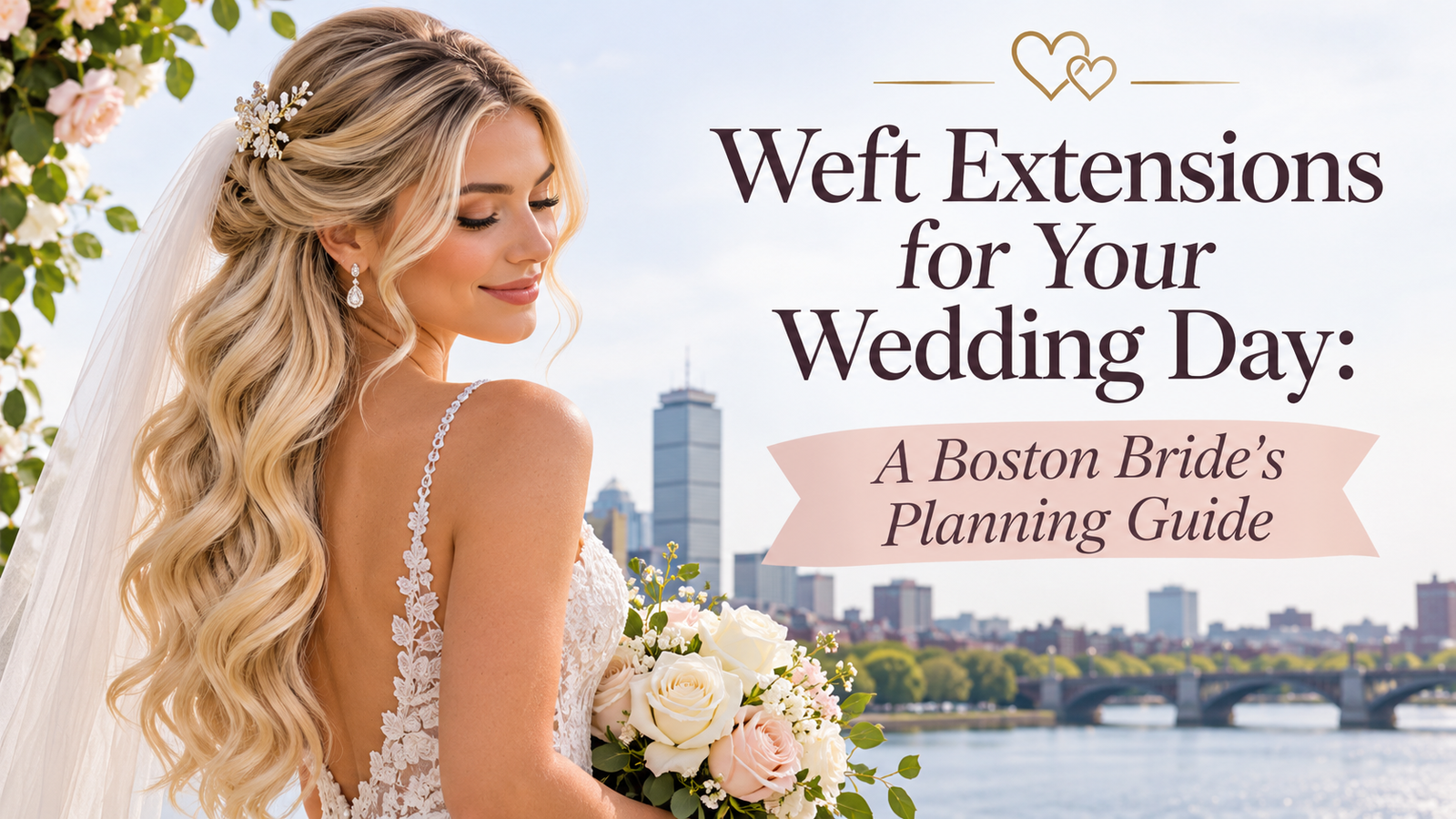
A weft is a long strip of hair joined at the top. Your stylist creates a neat row across the back of your head, usually with small beads, and attaches the weft to it. Because one weft covers a wide section, you get noticeable volume and length with fewer attachment points than many other methods. For the bigger picture, read why weft hair extensions are great for fuller, longer hair.
At Enlighten Beauty Studio on Newbury Street, we offer beaded weft extensions and sew-ins, alongside tape-ins. You can read more about each method on our hair extensions in Boston page.
Why fine hair needs a different approach
Fine hair means each strand is thin. Thin hair means you have fewer strands overall. Many people have both. Either way, your hair has less to “hide” an attachment and less strength to carry extra weight.
That’s why a good stylist thinks about three things for fine hair:
- Weight: using lighter wefts, or less hair per weft, so your roots aren’t under strain.
- Placement: setting the row low enough that your own hair covers it, even when it’s windy or you wear a ponytail.
- Blending: matching color and cutting the extensions into your hair so there’s no visible “shelf” where your hair ends.
Signs weft extensions could be right for you
- Your hair is fine but still covers your scalp well at the back of your head.
- You want more fullness and some length, not a dramatic change.
- You prefer a method without glue or heat.
- You’re happy to come in for regular move-up appointments.
- You want a look that’s easy to style day to day.
When another option might suit you better
Wefts aren’t right for everyone. You might be better with a different method, or with a smaller install, if:
- Your hair is very sparse at the back, so the row would show.
- You have a sensitive scalp or ongoing hair shedding.
- You only want extensions for one event.
In some of these cases, tape-ins can be a lighter option, because they lie very flat and spread the weight across small sections. Our tape-in vs weft extensions guide compares them side by side.
Beaded wefts, hand-tied wefts and tape-ins for fine hair
Each method has its place. Beaded wefts give you plenty of volume with a flat, comfortable row. Hand-tied wefts are even thinner at the top, which many fine-haired clients like.
Tape-ins are light and very flat, which makes them another good fit for fine hair. Your stylist may even suggest a mix, so you get the best of each.
Will weft extensions damage fine hair?
Extensions that are fitted well and looked after properly shouldn’t damage your hair. Problems usually come from too much weight, rows that are too tight, skipped move-ups, or removing extensions at home.
Protect your hair by sticking to your move-up schedule, brushing gently from the ends up, and never sleeping with wet hair. You can find more detail in our guide to whether hair extensions are damaging and our hair extension maintenance guide.
What happens at your consultation
A consultation is where your stylist decides whether wefts will work for your hair. Expect them to:
- Look at your hair’s thickness, condition and how much your scalp shows at the back.
- Ask about your goals, lifestyle and how you usually style your hair.
- Match the extension hair to your natural color, often blending more than one shade.
- Recommend how many rows and wefts you need, and a lighter setup if your hair is very fine.
Caring for weft extensions when you have fine hair
- Wash two to three times a week with a gentle, sulfate-free shampoo, and keep conditioner away from the row.
- Brush with a soft loop or extension brush, holding the hair near the row to take the strain off.
- Dry the row completely after washing so it doesn’t stay damp.
- Sleep in a loose braid or on a silk pillowcase to reduce tangles.
- Come in for move-ups as your hair grows, so the row stays close to your scalp.
Ready to see if wefts are right for you?
Fine hair doesn’t mean you have to give up on fuller, longer hair. It just means the plan should be made for your hair. Book a consultation at Enlighten Beauty Studio, 207 Newbury St, #206, Boston, and we’ll tell you honestly whether wefts, tape-ins or a mix will give you the best result.
Call (781) 866-4772 or book online through our hair extensions page. Wondering about price first? See how much hair extensions cost in Boston.
Frequently asked questions
Are weft extensions good for thin hair?
They can be, if your own hair has enough density to cover the row. A stylist will often use lighter wefts and fewer rows for thin hair.
Will weft extensions look bulky on fine hair?
Not when they’re placed and blended properly. Lighter wefts, a low row position and a good cut help them sit flat and look natural.
Which is better for fine hair, wefts or tape-ins?
Both can work. Tape-ins are very light and flat, while wefts add more volume with fewer attachment points. Your stylist will suggest the best fit after looking at your hair. See which type of hair extensions is right for you.
Do weft extensions hurt?
They may feel a little snug for the first day or two, but they shouldn’t hurt. If they feel painful or pull, call your stylist.
How do I know if I have enough hair for wefts?
A consultation is the easiest way to find out. Your stylist will check how well your hair covers the back of your scalp.