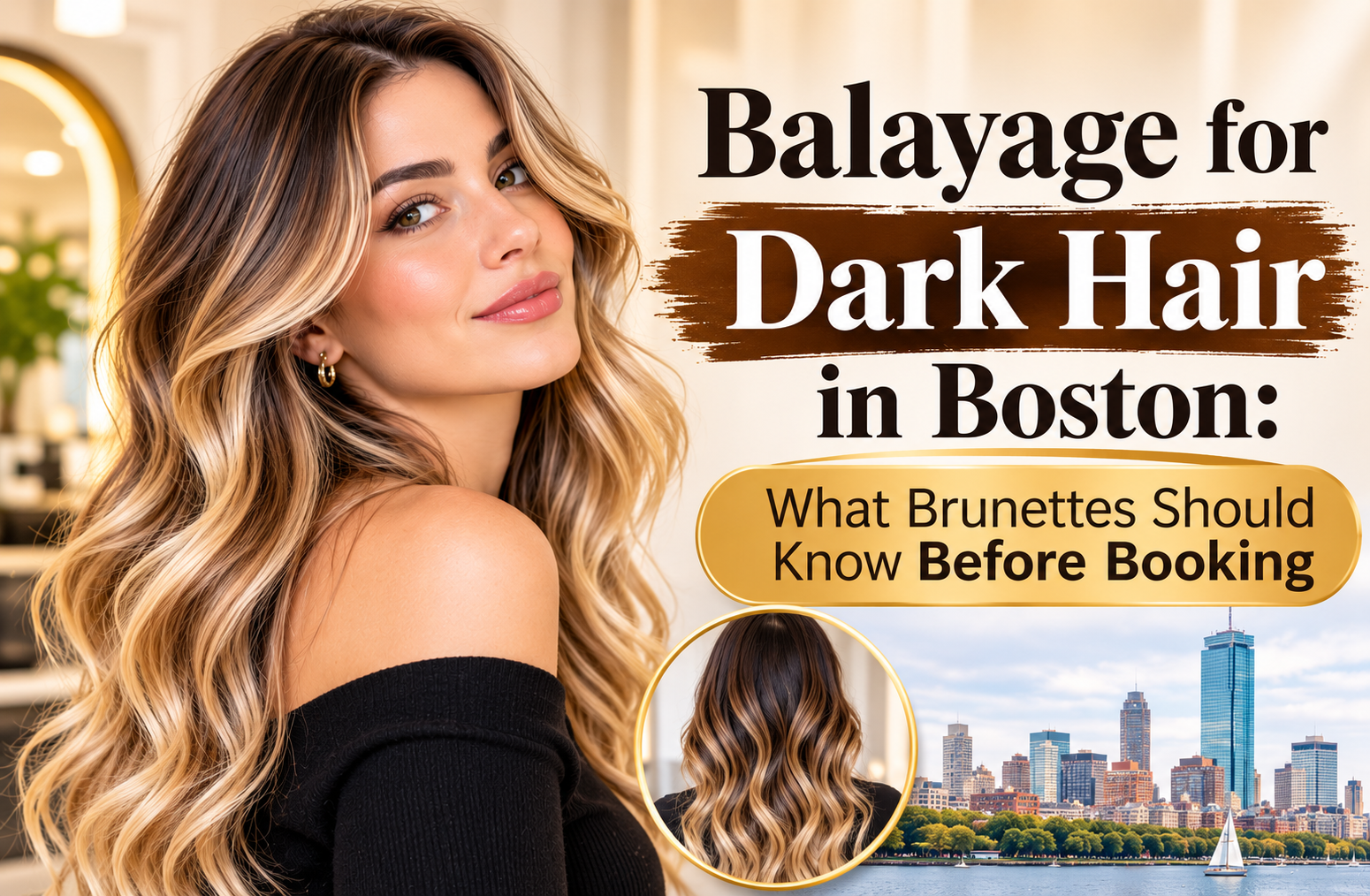

If you have blonde hair and you’re considering keratin for blonde hair in Boston, you already know the struggle: the dry air, the summer humidity, and the color that never quite behaves the way you want it to. Keratin treatments can be transformative for smoothness and shine, but when your hair is lightened, highlighted, or balayaged, the equation changes. This isn’t a one-size-fits-all service, and the details matter more than they do for natural brunettes. Before you book that appointment, here’s what you need to understand about how keratin smoothing works on blonde hair specifically.
Can blondes get a keratin treatment?
Yes, but with caveats. Bleaching alters the internal structure of the hair, opening the cuticle and weakening protein bonds, which leaves strands more porous, dry, and fragile . That doesn’t mean keratin is off-limits—it means timing and formulation are critical. Freshly bleached hair is especially vulnerable to heat and additional chemical processing, so most stylists recommend waiting one to two weeks after a lightening session before applying a smoothing treatment .
The bigger issue is tone. Traditional keratin treatments can sometimes lift or shift color, and blondes are the most likely to notice this because lighter shades show change quickly . Heat-activated sealing can affect freshly deposited toner, potentially pushing your carefully crafted cool blonde toward something warmer or duller . This is why several professional lines now offer blonde-specific formulas with violet pigments built in, designed to neutralize brassiness while smoothing . If your stylist is reaching for a generic keratin formula without asking about your color history, that’s a red flag.
Highlighted, balayage and bleached hair: why your color history matters
The difference between balayage vs. highlights isn’t just aesthetic—it affects how your hair will respond to keratin. Highlights typically involve foils and saturated lightener applied close to the root, creating uniform lift from scalp to ends. Balayage is painted freehand, meaning the lightened sections have softer gradients and often less consistent porosity along each strand . A stylist doing your keratin needs to know which technique was used, when it was done, and what developer strength was involved.
Why does this matter? Keratin treatments work by depositing a protein layer around the cuticle and sealing it flat with heat . On porous, lightened sections, that coating can absorb unevenly. On hair that’s been double-processed or lifted aggressively, the risk of protein overload—where hair feels stiff and brittle rather than soft—goes up . A good consultation will involve your stylist actually touching your hair, asking about the last time you bleached, and possibly doing a strand test before committing to a full service.
Keratin or Brazilian Blowout for blonde hair?
This is where keratin vs. Brazilian Blowout becomes a practical question rather than an academic one. Traditional keratin treatments tend to deliver more dramatic smoothing and can last three to five months, but they often require a 48-to-72-hour waiting period before you can wash or tie back your hair . They also carry a higher risk of shifting your blonde tone because of the heat involved in sealing .
Brazilian Blowouts, by contrast, coat the hair rather than restructuring it, typically last 10 to 12 weeks, and allow you to wash the same day . For color-treated and highlighted hair, many stylists consider Brazilian Blowouts the safer bet precisely because they’re less aggressive and less likely to disturb your toner . The tradeoff is that you get less curl reduction and a shorter lifespan. If your priority is preserving a delicate platinum or ash blonde, a gentler smoothing option may be worth the compromise. If you have thicker, coarser highlighted hair and want maximum frizz control, a keratin treatment with a blonde-safe formula might be the better fit.
Should you color before or after keratin?
The short answer: color first, wait at least two weeks, then do keratin . This gives the color time to settle and reduces the chance that the heat from the smoothing process will strip or shift your tone. Some newer formaldehyde-free lines claim you can color before or after without issue, and certain blonde-specific formulas are designed to be flexible . But the conservative approach—color, wait, then smooth—remains the safest bet for lightened hair.
If you’re doing both in one salon visit, your stylist needs to be explicit about the order and the products used. Keratin applied before color can create a barrier that prevents even pigment absorption, leading to patchy or washed-out results . And if you walk out with fresh keratin and immediately book a gloss or toner touch-up, you may find the color fades faster than expected because the sealed cuticle blocks penetration . Timing is everything.
Aftercare for blonde hair after keratin
The first 72 hours are non-negotiable: no washing, no ponytails, no tucking behind the ears, no clips . After that, sulfate-free shampoo becomes your permanent reality. Sulfates strip the keratin coating and fade your color faster, which is the last thing you want when you’ve invested in both a lightening service and a smoothing treatment.
For blondes specifically, look for aftercare that combines sulfate-free cleansing with violet toning. Products designed for keratin-treated blonde hair often include both, addressing brassiness and treatment longevity in one step. When it comes to making keratin last, wash frequency matters as much as the products themselves—every other day at most, ideally every third day if your scalp allows it. And if you’re a swimmer or spend time in Boston’s summer humidity, consider a leave-in protectant before exposure to chlorine or salt water, both of which degrade keratin results faster than normal wear.
Questions to ask your stylist
Before you commit, get specific answers to these:
What’s the active ingredient in the formula? Formaldehyde-free options using glyoxylic acid or amino acids are increasingly common and safer, though they may not last quite as long as traditional formulas . Ask directly.
Is this formula designed for blonde or lightened hair? If the answer is “it works on everyone,” press further. Blonde-specific formulas exist for a reason .
How will you protect my tone during the heat sealing? A stylist who understands blonde hair will have a plan for this, whether it’s a lower flat-iron temperature or a color-protective primer.
What’s my wait time before I can wash, and what products do I need to buy? If they don’t mention sulfate-free before you ask, that’s a sign they may not be thinking about aftercare.
FAQs
Will keratin ruin my blonde tone?
It can shift it, especially if the treatment is done immediately after coloring or toning. Waiting at least two weeks after color and choosing a blonde-safe formula reduces the risk significantly .
Can I get an express keratin if I’m short on time?
Yes. Express keratin services are designed for quicker appointments and shorter-lasting results—typically around 10 weeks—and they’re often gentler on fragile or high-lift blondes . They’re a good option if you want smoothing without a three-hour commitment or a long waiting period.
How do I make keratin last longer on highlighted hair?
Sulfate-free products are the baseline. Beyond that, minimize heat styling, avoid chlorine, and don’t over-wash. Some stylists also recommend a bond-building treatment between keratin appointments to maintain strength without stripping the coating .
Is keratin safe on balayage?
Generally yes, but the freehand nature of balayage means porosity varies along each strand. A strand test and a stylist who actually looks at your hair—not just your inspiration photo—are essential .
How often can I get keratin treatments?
Most stylists recommend spacing them three to four months apart, or whenever the previous treatment has substantially faded. Overlapping too frequently on lightened hair can lead to protein buildup and stiffness .
Boston’s climate is hard on blonde hair—dry winters indoors, humid summers outdoors, and color that has to survive both. A keratin treatment can be a genuine asset, but only if it’s approached with your color history in mind. The right formula, the right timing, and honest communication with your stylist will make the difference between smooth, bright blonde and a tone that’s gone sideways.