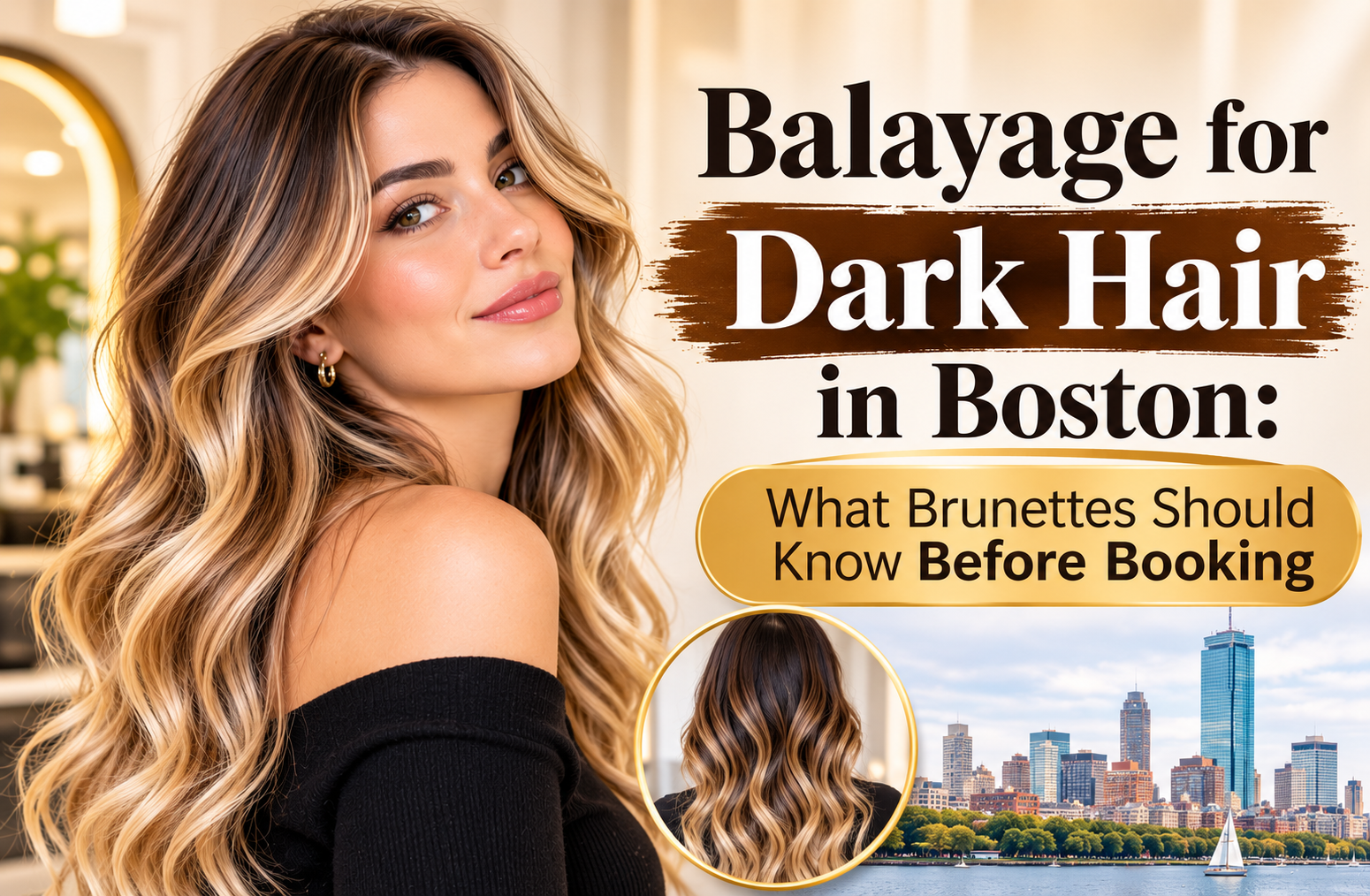
If you have dark hair, you have probably saved a few balayage photos and wondered how they would actually look on you. Maybe a soft caramel glow. Maybe something closer to honey. Maybe you’re just tired of one flat color and want a little movement without committing to full highlights.
Good news: balayage and dark hair work really well together. The trick is knowing what to expect going in, because lightening brunette hair behaves a little differently than lightening blonde or light brown hair. This guide walks you through it in plain terms, so you can walk into your consultation with clear questions and realistic goals.
What balayage actually is
Balayage is a hand-painted lightening technique. Instead of placing color in neat foil sections from root to tip, your colorist paints lightener onto the surface of the hair where light would naturally hit it. The result is softer and more blended, with no sharp line at the root as it grows.
If you’re still deciding between the two techniques, our guide to balayage vs highlights breaks down how they differ in look and upkeep.
Why dark hair needs a different plan
Dark hair has a lot of natural warm pigment. When it’s lightened, it doesn’t jump straight from brunette to beige. It moves through red, then orange, then gold. That’s normal chemistry, not a mistake.
This is why some brunettes see brassy or orange tones after lightening. It usually means the hair was lifted part of the way and then left without the right toner, or the goal was lighter than the hair could safely go in one appointment.
A good colorist plans for this from the start. They’ll talk about how light your hair can go while staying healthy, and which tone will finish it so the warmth looks intentional rather than accidental. For some hair, that means building brightness gradually rather than chasing a dramatic change all at once. Your stylist will tell you what’s realistic for your hair at the consultation.
Shades that tend to suit brunettes
You don’t have to go blonde to get a beautiful balayage. Many brunettes are happiest with shades that sit only a few levels lighter than their base. A few popular directions:
- Caramel and toffee: warm, soft and easy to wear, especially if you already have warmth in your skin tone.
- Honey and golden brown: a little brighter, great for adding glow around the face.
- Mocha and cool brown: for anyone who wants dimension without warmth. This usually needs toner to keep it cool.
- Chocolate with subtle ribbons: the lowest-contrast option, ideal for a first balayage or a more professional look.
- Bronde: a blend of brown and blonde for people who want noticeable brightness but not a full blonde change.
Bring a few photos, but also bring one or two photos of looks you don’t like. That often tells your colorist more than the inspiration pictures do.
A quick word on toner
On dark hair, toner is what turns raw warmth into the shade you actually asked for, like caramel or a cooler mocha. We cover toner and brassiness in more detail in our guide to choosing the right balayage color. Toner and gloss are also on our color menu, which you can see on the balayage and highlights in Boston page.
Balayage, foilyage, or lowlights?
Not every brunette wants the same thing, so it helps to know the options:
- Balayage gives the softest, most lived-in result. Great if you want low contrast and a forgiving grow-out.
- Foilyage combines hand-painting with foils for a bit more brightness. Helpful when dark hair needs extra lift to reach the shade you want.
- Lowlights add darker tones back in. Useful if past highlights have left your hair looking flat or too light overall.
Your colorist may mix these. A face-framing brighter piece with softer balayage through the back is a common combination.
What to ask at your consultation
A short consultation saves a lot of guesswork. Questions worth asking:
- How light can my hair go today while staying healthy?
- Will this need toner, and what tone are you aiming for?
- My hair is dark or has old color in it. How will that affect the result?
- What can we do to keep my hair healthy during lightening?
- How will this grow out, and when would a gloss or toner refresh make sense?
- What should I change in my routine at home?
Also mention anything in your hair history: box dye, henna, previous color correction, or a recent smoothing treatment. Old color can lift unevenly, and your stylist needs to know about it before they start.
Keeping dark balayage looking fresh
Brunette balayage grows out softly, and tone is usually what fades first. One tip specific to dark hair: if your goal was a cool brown and warmth creeps back, a blue shampoo tends to suit brunettes better than purple. For the rest of your aftercare routine, see the tips in our balayage color guide.
If you also deal with frizz, ask whether a smoothing treatment makes sense with your color. Our post on keratin for blonde hair explains why lightened hair needs extra care with smoothing, and much of it applies to lightened brunette ends too.
Quick FAQ
Can balayage work on very dark or black hair?
Yes. It often looks lovely with warm, soft shades like caramel or chocolate ribbons. Your colorist will tell you how much brightness is realistic for your hair.
Is balayage low maintenance on brunettes?
Generally, yes. There’s no hard root line, so it grows out softly. Tone may need a refresh sooner than the lightness itself.
Do I need to go blonde?
Not at all. Many brunettes choose shades only a few levels lighter than their natural color.
Ready to talk shades?
If you’re thinking about balayage for dark hair, start with a consultation. Bring your photos, your hair history and your questions, and we’ll help you find a shade that looks like you, only brighter.
Enlighten Beauty Studio is at 207 Newbury St #206, Boston, MA 02116. Call (781) 866-4772 or book your appointment online.